
As Melbourne gears up to host the Australian Grand Prix, the familiar rhythms of the Formula One season are making a return. Teams arrive in the city, Albert Park transforms into a temporary circuit, and fans start debating which drivers and teams might dominate the season ahead. Meanwhile, the latest season of Formula 1: Drive to Survive has just been released on Netflix. In its 8th season, it again offers a behind-the-scenes look at the rivalries, controversies, and personalities that define the sport.
For many fans, the new season of Drive to Survive has become a regular part of the annual lead-up to the Formula One season. What started as a documentary series has developed into a powerful entry point into the sport, introducing new audiences to Formula One and changing how fans experience it. The show is widely recognised for helping to fuel the rapid growth of Formula One’s audience in markets such as the United States over the past decade.
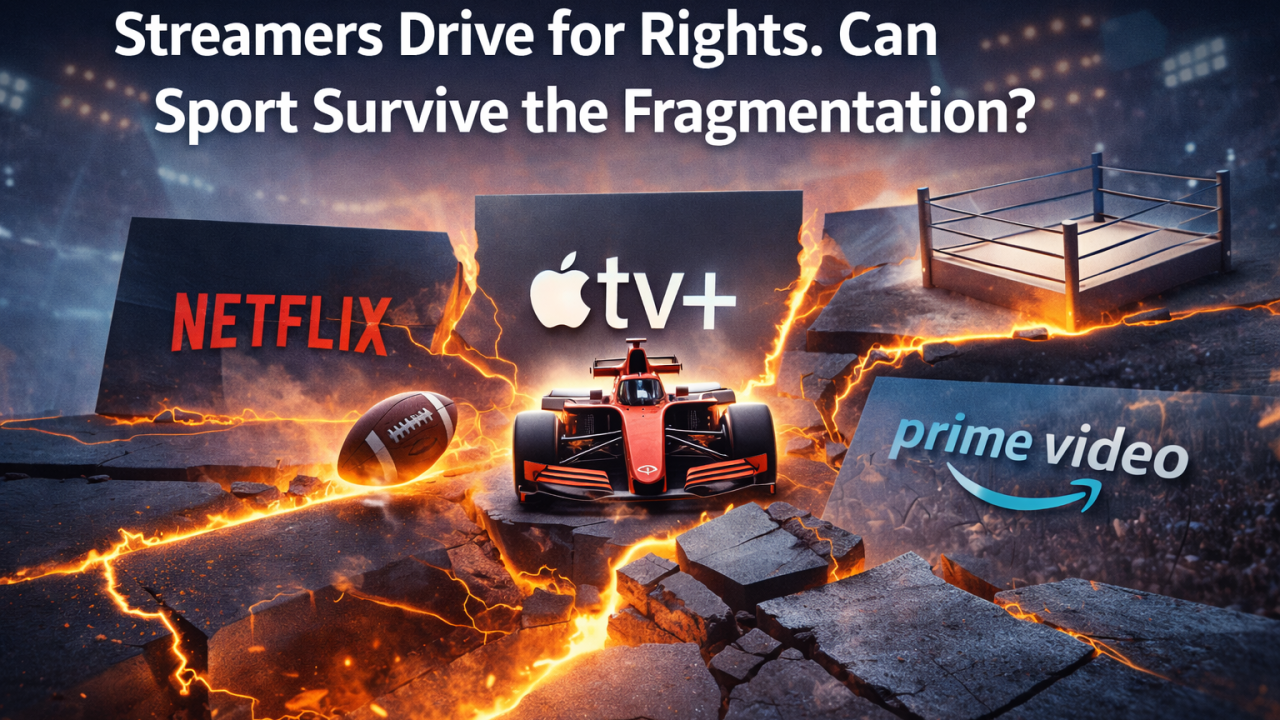
However, the success of Drive to Survive reveals a broader story about how sport’s relationship with streaming platforms is evolving. Over the past decade, streaming services have realised that sport is not just about live broadcasts. It involves storytelling, audience data, and increasingly, control over the media rights themselves.
Streamers Are Moving into Live Sport
It is perhaps no surprise that several major streaming platforms have shifted from sports storytelling to live sports broadcasting. Sport remains one of the few types of content that audiences consistently watch live. While films and TV series can be enjoyed at any time, live sport maintains a sense of immediacy and shared experience.
Several major streaming platforms have begun positioning themselves within this space. Amazon has been one of the most significant entrants. Through Prime Video, Amazon holds exclusive rights to Thursday Night Football games from the National Football League in a landmark agreement, reportedly worth around $1 billion per year through 2033. The deal marked the first time the NFL granted an exclusive national broadcast package to a streaming platform.
Apple has taken a similarly ambitious approach. In 2023 the company launched MLS Season Pass after securing a 10-year global streaming rights agreement with Major League Soccer, making every MLS match available worldwide through its streaming platform.
Netflix is also beginning to expand its role in live sport, although its strategy seems more selective than some of its competitors. The company recently secured a major deal with WWE. The agreement, reportedly worth over US$5 billion across ten years, is one of the largest sports-entertainment rights deals secured by a streaming platform.
Alongside this agreement, Netflix has begun experimenting with high-profile live sporting events aimed at attracting a global audience. The platform streamed the Jake Paul–Mike Tyson boxing match, which attracted tens of millions of viewers worldwide and demonstrated Netflix’s capacity to deliver large-scale live broadcasts. It has also ventured into live NFL coverage, securing rights to broadcast National Football League games on Christmas Day as part of a new partnership with the league.
Rather than pursuing full-season league packages like Amazon or Apple, Netflix seems to be testing a different model centred on event-driven sports broadcasts—major international spectacles that can draw large live audiences while still aligning with the platform’s wider entertainment approach.
Sport as a Platform Ecosystem
For many of these streaming companies, however, sport is not just another type of video content. It can become part of a much larger digital ecosystem. Companies such as Apple and Amazon operate across multiple digital services, and sport provides an opportunity to connect audiences across these platforms. Apple’s involvement in Formula One clearly demonstrates this. Beyond streaming races on Apple TV, content can appear across Apple’s broader services. Race information and updates can appear in Apple News, circuit layouts can be integrated into Apple Maps, and drivers or teams can curate playlists on Apple Music. Podcasts and editorial coverage extend the sport’s storytelling.
Apple’s growing relationship with Formula One also highlights how quickly the sports broadcasting landscape is shifting. Beginning in 2026, Apple will become the exclusive U.S. broadcaster for Formula One, replacing ESPN, which has carried the sport since 2018. The five-year deal reportedly values the rights at roughly US$140–160 million per season and will include every race session on Apple’s streaming platform.
This change is particularly notable because ESPN played a key role in rebuilding Australia’s Formula One audience over the past decade, a period that coincided with the rise of Drive to Survive. The shift from a traditional sports broadcaster to a global technology platform reflects a broader change in how sports media rights are now being distributed.
A similar logic applies at Amazon. Its investment in NFL rights through Prime Video is not simply about attracting viewers to a streaming service. Amazon can connect the viewing experience directly to its broader retail platform, promoting merchandise and related products through its online marketplace.
For technology companies, sports rights are therefore not just media assets. They are a way of strengthening the broader platform.
The Fragmentation of Sports Media Rights
At the same time, the entry of streaming platforms into the sports market is contributing to a significant shift in how sports media rights are structured. Traditionally, sports organisations often sold their media rights to a small number of networks that carried most or all games across a single platform. Fans knew where to go to watch their team.
Today, rights are increasingly divided across multiple broadcasters and streaming services. In the United States, games from the National Football League and Major League Baseball are now spread across a mixture of traditional television networks and streaming platforms.
For sports leagues, this fragmented model can maximise revenue by creating competitive bidding between broadcasters and technology companies.
For streaming platforms, fragmented rights reduce the barrier to entry. Instead of buying a full rights package, they can secure a smaller part of the schedule.
For fans, however, the viewing experience becomes increasingly complex and fragmented.
Viewing the Issue from Australia
From an Australian perspective, the rise of fragmented sports rights raises important questions about the future of sports broadcasting locally.
Australia has traditionally operated under a hybrid model combining free-to-air television with subscription broadcasting. The latest media rights agreement for the Australian Football League reflects this structure. Under the current arrangement, the Seven Network broadcasts a selection of matches each week on free-to-air TV, while Foxtel holds the rights to every game across its subscription and streaming services. It’s also worth noting that Foxtel has recently been acquired by the global sports streaming platform DAZN.
Currently, a fan wanting access to every AFL game usually needs Foxtel in addition to free-to-air broadcasts. But imagine a future rights deal where an extra streaming service comes into play. A fan might require free-to-air TV for some matches, a subscription sports service for others, and a global streaming platform for exclusive games. In such a scenario, following a single team across a season could mean needing access to three different platforms and knowing which one you can watch your team play on each week.
The Next Phase of the Streaming Wars
Sport is rapidly becoming one of the most important battlegrounds in the streaming economy. Platforms are searching for live content that drives engagement and subscriptions, while sports leagues are seeking new revenue streams and global audiences.
The success of Drive to Survive shows how streaming platforms can reshape the way audiences discover sport. At the same time, the entry of some streaming companies into live sports is transforming how sports rights are structured and distributed.
If current trends continue, the future of sports viewing may increasingly resemble the fragmented landscape of film and television streaming. Fans may need to navigate multiple platforms simply to watch the sports they love.
For streaming companies, sport represents data, engagement and ecosystem integration.
For audiences, however, the question may become much simpler: How many subscriptions are we willing to maintain just to follow our team?
Considerations
- Are sports documentaries like Drive to Survive becoming a strategic way for streamers to grow their audiences before securing live sports rights?
- Does the data advantage of streaming platforms fundamentally reshape how sports leagues negotiate media rights?
- When does the fragmentation of sports rights start to limit access for fans?
- How should Australian sports leagues balance growing media revenue with ensuring broad public access to sport?
- Could the future of sports broadcasting resemble the fragmented streaming landscape already seen in film and television?