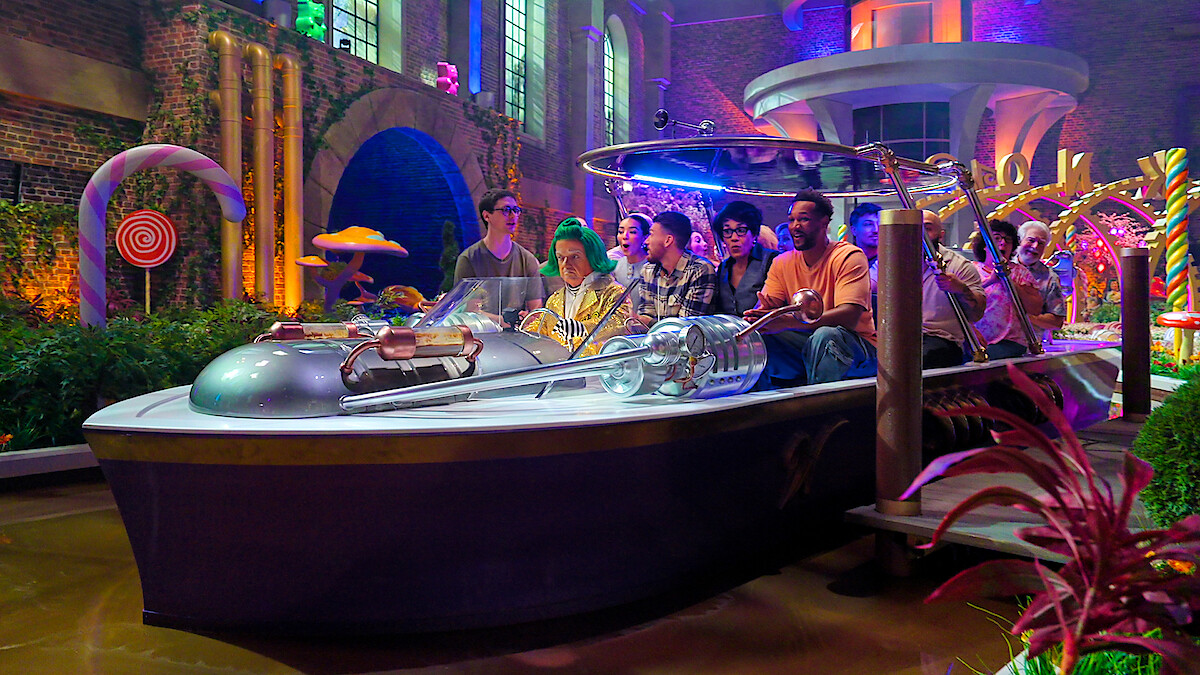
Fifty-five years after Gene Wilder first opened the doors to Willy Wonka’s chocolate factory, Netflix now invites audiences back inside. It features familiar visuals, the return of an original Oompa-Loompa, and a Wonka voice that resembles the original chocolatier many remember. However, the film and TV industry that existed when those doors first opened has changed.
Wonka’s The Golden Ticket launched on Netflix last week (23 September 2026), during the 55th anniversary year of Willy Wonka & the Chocolate Factory. The new series has nine episodes: seven arrived together, with its two-part finale scheduled for release in a few days (30 September).
The release strategy is unique, blending aspects of two well-known models. Netflix offers viewers most of the competition early on, then delays announcing the winner to generate anticipation and discussion. It isn’t a complete season released at once, nor a standard weekly episode schedule. While the amount of conversation it will generate can’t be predicted from the schedule alone, withholding the ending motivates viewers to return during the most intense part of the competition.
That release pattern is just one aspect of a broader narrative. The programme transforms a fictional contest into reality TV, employs artificial intelligence to recreate a 1971 performance, involves original cast members in the new factory, and depends on Australian crews to construct it at scale. At its core, Netflix’s ownership of the Roald Dahl Story Company and a vision that reaches far beyond a typical screen adaptation.
An old competition becomes a new one
In hindsight, Charlie and the Chocolate Factory contains much of the structure of a reality competition. There is a scarce number of tickets, a group of people entering an extraordinary setting, a series of tests and temptations, and ultimately a winner. The Golden Ticket makes that structure literal. Twelve ticket holders, each bringing a partner, enter the factory and face challenges designed to test more than their appetite for sweets.
This approach differs from simply making another Charlie film. The audience already knows the importance of the golden ticket and what awaits behind the gates. Netflix can therefore focus less on setting up the premise and more on creating a factory setting that feels authentic and lived-in. The original story involved a contest, with reality TV providing a framework to stage it.
The series also reminds viewers of which version of the factory helped establish its visual and emotional language. It draws on Roald Dahl’s novel, but its direct tributes to the 1971 film are unmistakable. Those connections do more than reassure audiences that this is the Wonka they know. They also connect the new format to the people who first brought that version to the screen.
A tip of the hat to 1971
Rusty Goffe, who played an Oompa-Loompa in the original film, returns in the new series with his son Ben. Peter Ostrum, the original actor for Charlie Bucket, also makes a brief appearance in the first episode. Goffe’s return with his son and Ostrum’s cameo create a sense of continuity across generations. These appearances pay tribute to those who contributed to the original film’s memorability. These appearances also make the 55-year passage visible, treating nostalgia as an evolving connection rather than just familiar props.
Gene Wilder’s role is more complicated. Although Wilder died in 2016, the program includes a reconstructed version of his Wonka voice. Netflix says it did this with his estate’s consent. The voice was created using supplied archival recordings and audiobooks to mimic his distinctive inflections. This choice seems to honour his memory and establish a clear connection to the 1971 Wonka film.
It also encourages us to rethink how screen archives, performance, and memory are connected. A recording captures an actor’s initial on-screen performance, but recreating a voice lets us insert a familiar sound into new contexts and dialogues the actor never faced. While Wilder’s voice may be recognisable, his original portrayal as Wonka involved much more, from timing, expression, physical presence, and interaction with others. What appears in The Golden Ticket is a suggestive nod to that portrayal, crafted by a different production team and understood through the audience’s love for the original film.
Wilder’s family involvement enhances this tribute by adding their perspective. Their approval allows the production to honor his work with the backing of those responsible for his legacy, though it cannot reveal how Wilder himself might have viewed the project. That leaves a question extending beyond this particular series: how do we honour an actor’s original on-screen performance when technology allows elements of it to be recreated beyond their lifetime? The Golden Ticket brings that question into a familiar setting, where the desire to reconnect with a much-loved portrayal sits alongside the responsibility of deciding how to remember and represent it.
Netflix bought more than another adaptation
When Netflix acquired the Roald Dahl Story Company in 2021, it described a much broader ambition than producing more films based on books. The company spoke of a universe spanning “animated and live action films and TV, publishing, games, immersive experiences, live theatre, consumer products and more.”
That wording best explains why The Golden Ticket is important. It transforms the characters, objects, imagery, and memories of a story into a new type of entertainment. The show is a reality competition, but it also shows how a fictional world can provide the rules and environment for a format that didn’t exist when the story was created.
After my conversation with Netflix co-CEO Greg Peters, I wrote about what happens when streaming becomes a starting point for other forms of entertainment. Wonka gives that argument a particularly tangible example. The screen series is only one possible way an audience could spend time with the factory. A game could turn its rooms into playable challenges. A live experience could use a golden ticket as the invitation to enter. Food, merchandise and theatre are already close to the heart of the fictional world. These are possibilities, not announcements of a Wonka attraction or game, but they closely resemble the range Netflix identified when it bought the Roald Dahl Story Company.
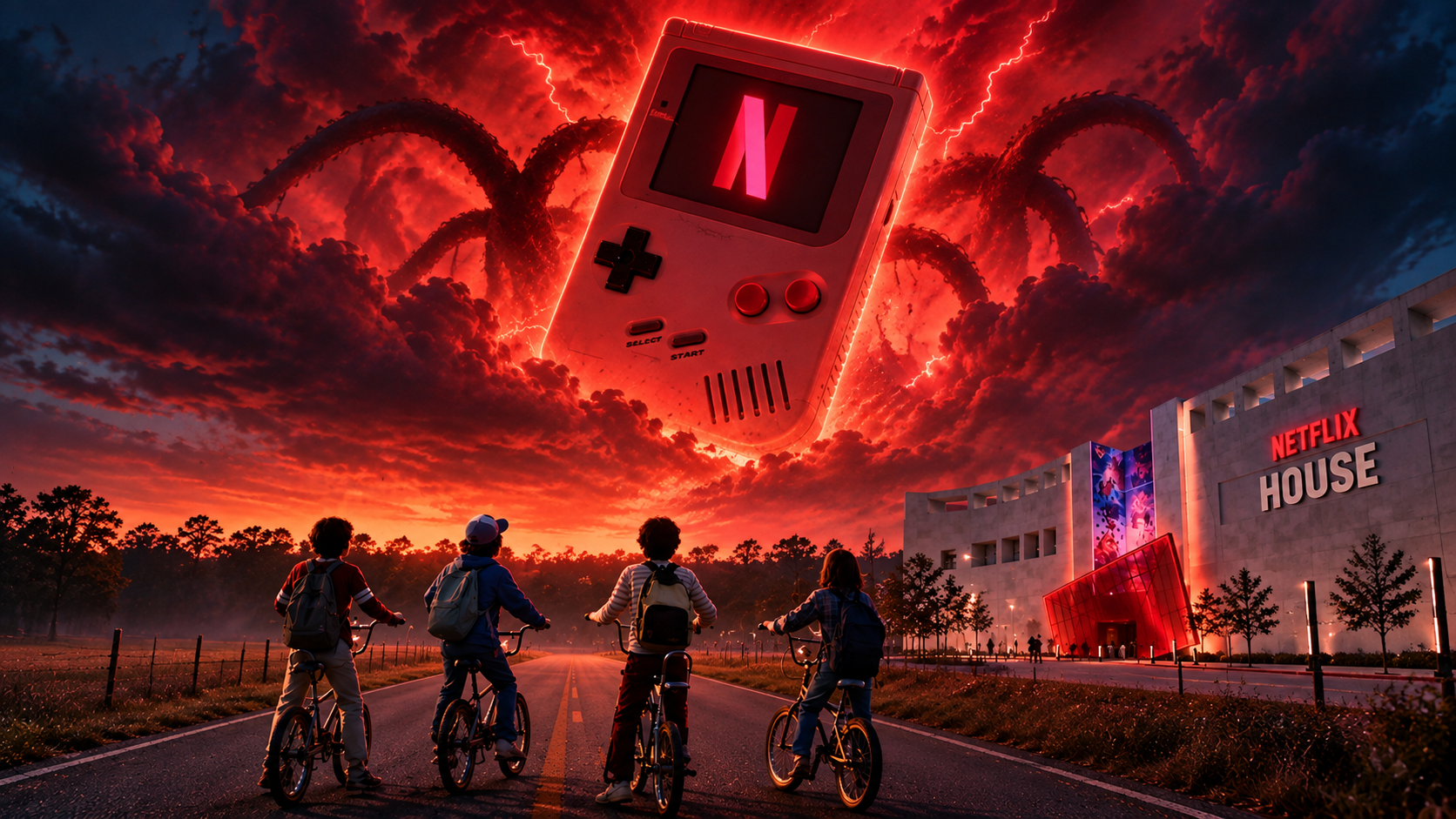
Netflix House shows that the broader concept is already being tested with various properties. Its venues feature attractions inspired by Squid Game, Wednesday, Stranger Things, and ONE PIECE, along with games, food, and merchandise. Since these properties are owned or controlled differently, they shouldn’t all be viewed as equal acquisitions. What they reveal is Netflix’s effort to deepen audience engagement with a story beyond just viewing at home.
In my second Greg Peters article, I examined the relationship between fandom and physical experience. Wonka asks the question more directly because the original story already involves crossing a threshold. Charlie not only learns about the factory but also wins a ticket to enter it. The competition has made this journey accessible to real contestants; adding visitor access would be a natural extension along the same lines.
Netflix has taken a similar step with Squid Game, moving from scripted drama to Squid Game: The Challenge and then to playable physical experiences. Its purchase of comic-book company Millarworld also shows an earlier interest in owning characters and story worlds, although ownership alone does not guarantee a successful expansion across formats. Dahl is the stronger example for this article because Netflix set out its cross-media intentions explicitly at the moment of acquisition.
Building somebody else’s factory in Australia
The fictional factory was built physically on the Gold Coast, with Screen Queensland designating Village Roadshow Studios as the production location and acknowledging Queensland creatives and crew for bringing it to life. Netflix reports that the production created 88,000 square feet of sets across three studios over 12 weeks, utilising practical environments that contestants could enter. This large scale underscores the region’s appeal, with its studios, craftspeople, and production expertise, though it does not reveal all factors influencing Netflix’s choice of location.
The Australian contribution goes beyond just providing a location credit. It involves designers, builders, technicians, and performers who helped adapt an established screen world into a functional environment for a competition. The program combines British literary IP, the legacy of a 1971 American film, a global streaming platform, and a substantial physical production in Queensland. Australia plays a key role in creating the program but remains mostly unseen in the story it narrates.
International productions create jobs, foster expertise, and bolster local businesses. Meanwhile, Wonka highlights the distinction between the ability to create entertainment worlds and owning those worlds to generate ongoing value across television, games, theatre, consumer products, and experiences. As more screen properties transition between these formats, Australia’s skills in set design and production could find broader applications. Ultimately, the key question is how much Australian-developed intellectual property can leverage this capability over time.
Netflix’s acquisition makes the ownership question unusually clear in this situation. Australian crews contributed to building the factory where contestants entered. Netflix, via the Roald Dahl Story Company, has the potential to expand this catalogue into other formats. This does not undermine the work done in Queensland; rather, it highlights why production and ownership should be considered jointly.
What the golden ticket now opens
The Golden Ticket is a useful snapshot of Netflix at a moment when its identity is still expanding. Its seven-plus-two release gives viewers a binge and a finale event. Its returning performers reconnect the programme with 1971, while a recreated voice raises new questions about how old performances can be used. Its Australian sets turn a fictional place into somewhere contestants can go, and Netflix’s broader strategy suggests other ways audiences might eventually enter worlds they first encountered on screen.
None of this implies that every Dahl story will turn into a game or that every Netflix series will become a physical attraction. The key point is that Netflix now has the capacity to evaluate these options within its portfolio. While familiar stories attract audiences, their long-term potential may depend on the variety of ways they can invite engagement.
In 1971, the golden ticket granted Charlie access to a chocolate factory. Fifty-five years later, it grants contestants entry to a reality show in Australia and audiences entry to a familiar world. For Netflix, the question is how many more doors that ticket might open.