Echoes of Screen & Streaming | Part 2 of a two-part series
In Part 1 of this two-part series, I examined what my discussion with Netflix co-CEO Greg Peters revealed about Netflix’s shift beyond traditional streaming. The main point was that pressing play might become a launch, rather than a conclusion. Personalised discovery could connect to live shared experiences; a sporting event could serve as the hub for documentaries, games, and other content; and what we previously called transmedia may increasingly be managed directly by the platform.
But that leads to a second question: once an audience finds something it cares about, what happens next?
This was another theme that kept surfacing during the roundtable. Our conversation ranged from DVD extras and physical Netflix experiences to AI-assisted production, and to advertising integrated into a program’s creative language. It also touched on a bold, unlikely idea involving retro gaming hardware. While each of these may seem like separate experiments, together they suggest that the future of streaming might focus as much on enhancing user experience and fostering fandom as on providing new shows to watch.
As with Part 1, this article is not intended to exhaust those questions. Peters’ comments on AI, advertising, fandom, games and physical experiences each open much larger areas for discussion. I will return to several of them in future Echoes of Screen & Streaming pieces.
Streaming solved access. DVD understood fandom
Our discussion about interactivity led me to ask Peters about something decidedly less futuristic: DVD extras.
For those interested in filmmaking or fans of a film or TV series, the DVD era offered content largely lost in streaming. Director commentaries, production documentaries, deleted scenes, interviews, and behind-the-scenes footage provided invaluable insights into the filmmaking process. While streaming made the programs more accessible, much of the supporting material from that time has vanished.
I asked Peters whether Netflix saw a future for that kind of material.
“In my mind we’re actually getting back to that idea.”
He talked about “bonus content”: video podcasts with creators, conversations about production decisions, written material, and other ways to go deeper into a title. His explanation connected directly back to our earlier discussion about moving between formats.
“People, you know, who are fans of a certain space, want to go deep on it.”
Streaming platforms are very good at suggesting what to watch next, but less so at supporting fandom, which often wonders how to immerse itself further in the experience.
Sometimes I don’t want another program that an algorithm thinks resembles the one I just finished, or that reflects my viewing history. I may want to know how it was made, hear from its creators, or explore its characters, narrative or broader world.
Streaming has made access effortless, but DVDs arguably captured fandom more effectively than streaming does. Netflix seems to be revisiting some of this understanding, though in very different formats.
From watching Netflix to experiencing Netflix
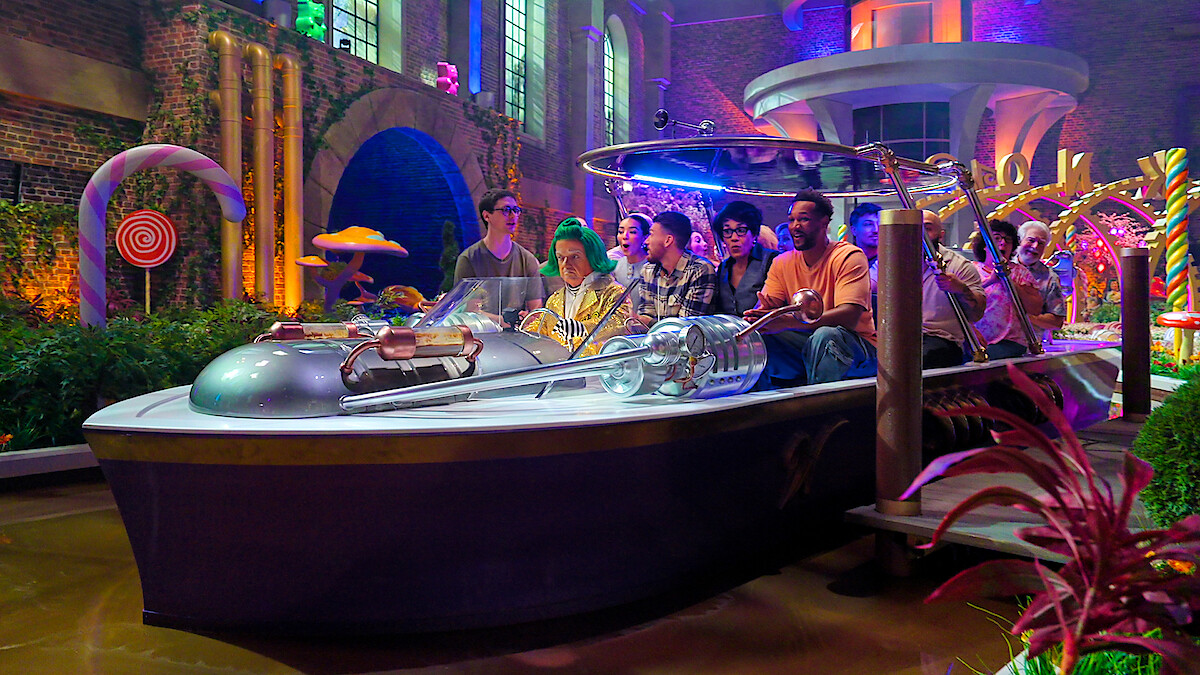
Netflix House perhaps makes this shift most tangible. When another journalist asked about Netflix extending its intellectual property into games, merchandise and physical experiences, Peters described them as different manifestations of the same broader idea.
“All of those are essentially attempts to extend the fan experience into different ways.”
Netflix House takes that extension entirely off the screen. Peters likened the concept to theme parks but proposed a model that could be scaled much more broadly: “You can have 100 of these things.”
This is especially interesting when placed alongside his remarks on personalisation and shared experience. A person might find a program via a highly personalised recommendation, watch it alone at home, and form a unique connection with it. However, that same individual could later enter a physical space with hundreds of others, each having their own relationship with the same cultural property.
The experience moves from personal to shared, from digital to physical.
That’s why I view Netflix House not just as merchandise or experiential marketing. It reflects how Netflix might approach the connection between its platform, intellectual property, and fandom. The screen does not disappear. It becomes part of the overall experience.
AI may change the economics of creativity
AI inevitably occupied a significant part of the conversation. Peters identified three areas where Netflix sees particularly interesting opportunities: content production, the user experience and advertising. The production discussion was perhaps the most relevant to my own work in screen media.
Peters described emerging tools that can understand the language and processes of film and television production. Creators could potentially experiment with lenses, lighting or camera choices, remove unwanted elements, alter visual details or make refinements that would previously have required considerably more time and visual-effects resources.
What interested me was that he didn’t frame this as AI suddenly making possible what filmmakers could never do before. In many cases, filmmakers can already make those changes. The limitation is money and time.
“I would like to make this better, but I have so many dollars to spend, so many days.”
A production might identify seven things it wants to change but have the resources to address only three. AI changes the equation if the cost of those alterations falls.
“Now we can say you can just do more of those.”
That may be one of the more immediate impacts of AI on screen production. It is not necessarily about pressing a button and asking AI to make a film. It is about changing the economics of thousands of creative decisions that go into making one. This has implications for production workflows, budgets, creative expectations and the people working within them.
Notably, Peters did not portray AI as a means to replace creative workers or to simply reduce costs. Instead, he emphasised how creators could achieve more when financial and time constraints on their creative choices are minimised. This raises broader questions about creative practices: as tools that once required significant time, expertise, or resources become more accessible in everyday workflows, how might this evolution affect practitioners’ decisions, the skills they develop, and the final outcomes on screen?
When the advertisement becomes part of the entertainment
Advertising was another area where Peters’ comments suggested the boundaries between entertainment and advertising may become less distinct.
He used Bridgerton as an example. A production has distinct creative rules, visual language, and documentation that establish its universe. Likewise, a brand has assets, guidelines, and rules that determine its appearance. You can combine these two information sets to generate advertising that fits seamlessly within a show’s creative world.
“If we’ve done it amazingly, it should feel a little like entertainment too.”
What particularly interested me was that Peters also discussed how some of the material used to define and document these creative worlds could potentially become part of the fan experience itself. The guidelines, references, and other material behind a production don’t necessarily have to remain hidden within the production process. Some of that material could potentially be surfaced for audiences who want to explore a programme and its world more deeply.
That connects directly with the idea of “experiencing Netflix” rather than simply watching it. A programme can extend into behind-the-scenes material, creator conversations, games, physical experiences and other forms of fan engagement. The documentation used to build the world could become another way to enter and explore it.
Advertising could become another extension of this, presenting a clear commercial opportunity while posing a media question. When an ad aligns with the programme’s creative style and aesthetic, feels consistent with its universe, and offers audiences another way to interact with that intellectual property, the line between the programme and advertising becomes blurred.
We are already familiar with entertainment properties branching into branded content, social media, merchandise, and physical activations. The individual elements are not new. What matters is their growing integration.
Advertising may no longer simply interrupt the entertainment experience. It could increasingly be designed to inhabit it.
A Netflix Game Boy?
Near the end of the roundtable, I posed a playful, slightly tongue-in-cheek question to Peters. I noted the resurgence of retro culture, such as vinyl records, Tamagotchis and vintage gaming systems. Then I asked him which single item from the past he would like to revive, even if only for a day.
Peters paused, acknowledged the question was good, and mentioned he wanted to think about it before giving a clearer answer. I’m still waiting for his final response, so there might be more to discuss in our next conversation.
In the meantime, we started exploring some possibilities. We briefly discussed Netflix’s old DVD-by-mail model, where the company began. Bringing that back even as a nostalgic promotion presents an obvious problem: plenty of people probably no longer have a DVD player. Peters then made a broader observation about how Netflix already engages with nostalgia through programming such as Stranger Things.
Eventually, though, he offered what he described as a deliberately “lame” answer.
Peters talked about people rebuilding vintage handheld gaming systems: devices that retain the look and feel of an old handheld device but contain modern processors and capabilities. He wondered about using something like that as a controller for Netflix games and interactive experiences.
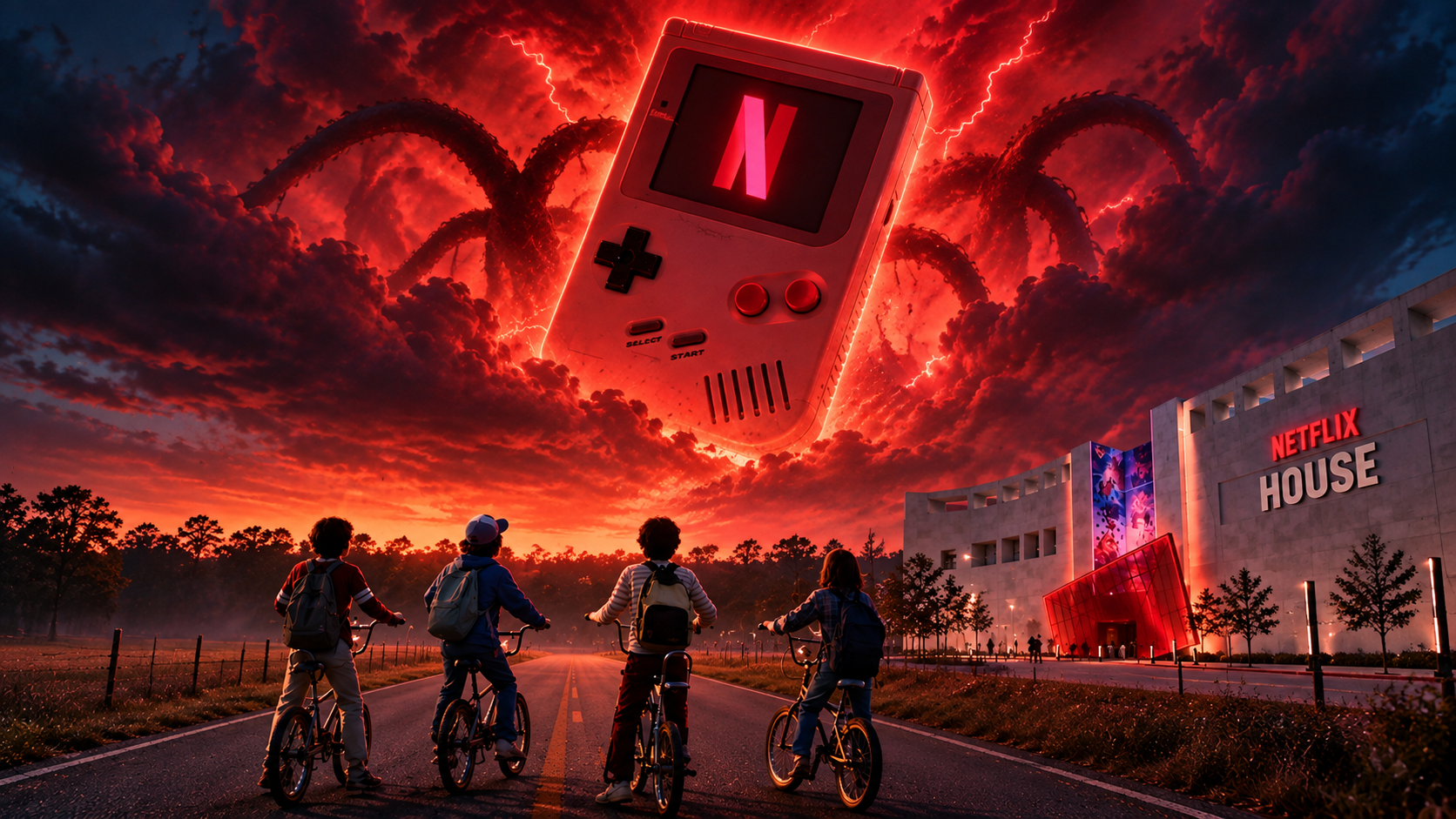
I immediately asked: “Like a Netflix Game Boy?”
“Yes,” Peters replied.
He made it very clear that this exchange should not be seen as an announcement of a product. He described it as “the dumbest idea from an actual business perspective” and emphasised: “I wouldn’t anticipate seeing this.”
But I actually think the underlying idea is better than Peters gave it credit for.
Netflix may not need to manufacture a dedicated handheld gaming system at all. Earlier in our conversation, Peters had already spoken about using the phone as a controller for Netflix interactivity. Perhaps the retro object does not need to contain all the technology itself.
Imagine a Game Boy-style controller or housing designed around the phone you already own. The Netflix app provides the display, connectivity, games and interactive functionality. The accessory provides the physical buttons, form and nostalgic look and feel.
But what interests me more is what could happen if we extend that idea beyond gaming.
This device could serve as an additional interface to the broader Netflix experience. It might connect with games, films, and TV shows, and also extend into physical environments like Netflix House. Instead of just using a phone to explore these experiences, a specialised physical object could become an integral part: something you hold, interact with, and use as you transition between digital content and the real world.
That distinction is important. While a phone can perform many of these technological functions, it may not fully replicate the physical experience of using a dedicated controller. The buttons, shape, and tactile feedback contribute significantly to the experience. In a Netflix House setting, that physical element could enhance how audiences play, explore, or engage with the worlds connected to Netflix properties.
It might also move with the audience. The same device used to play a Netflix game at home could interact with the TV program and then serve a different purpose during a visit to Netflix House. The technology becomes more engaging not as a standalone device but as a connector between various aspects of the fan experience.
That brings the idea back to something Peters discussed throughout our conversation: finding ways for audiences to transition seamlessly between various entertainment and engagement forms. In that context, the imagined “Netflix Game Boy” shifts from merely replicating a classic handheld console to serving as a tangible link between Netflix’s digital and physical worlds.
This is clearly my interpretation of Peters’ hypothetical, not an official statement from Netflix about development. However, what I found intriguing in the exchange is that retro design doesn’t have to mean recreating an old product. Instead, it can serve as a new interface for modern media.
And, personally, I would be interested. I have recently found myself getting back into retro gaming with my 11-year-old, including Mortal Kombat, so the idea of a Netflix-style Game Boy immediately appealed.
Of course, Peters still owes me his better answer to the original question. I’ll happily keep waiting.
The future of media carries quite a lot of its past with it
The Game Boy exchange was brief but unexpectedly highlighted many themes present throughout the rest of the conversation. DVD extras are making a comeback as bonus content. Appointment television regains popularity through live events. Choose Your Own Adventure-style stories return with new interactive formats. The visual style of the 1980s comes back via Stranger Things. Physical entertainment venues are reemerging around intellectual properties that audiences initially experience on digital platforms.
Old ideas are not necessarily disappearing. They are being rebuilt with new technology beneath them.
That might be one of the most insightful ways to think about where Netflix, and potentially that of media in general. Streaming didn’t eliminate traditional media like television, cinema, games, live events, fandom, or physical experiences. Instead, it transformed how people access and engage with these forms. Currently, the platform has the potential to unify them once more.
In Part 1, I argued that pressing play could become a default starting point. This second part explores what might surround that moment: more intense fandom, bonus content, games, live and physical experiences, advertising that mimics entertainment, and production tools that change the economics for creators.
Peters described Netflix as attempting to bring together two areas that have historically been quite distinct: storytelling and modern internet technology. “We really are attempting to fuse competence at both of those spaces together.” That may help explain why Netflix appears to be moving in so many directions at once.
I don’t believe Peters offered a clear blueprint for what Netflix will look like in five or ten years, nor do I claim to know the company’s future decisions. Instead, the discussion offered hints about the questions Netflix is exploring: how audiences find entertainment, how they share it, how fandom goes beyond the show itself, how creators produce content, how brands engage, and how digital experiences could become physical once more.
I’ve only been able to introduce a few of the roundtable discussions in these two articles. I plan to revisit these topics in future Echoes of Screen & Streaming pieces, especially on AI and creative production, event-based sports rights, personalisation and shared culture, local content, advertising, interactivity, and the evolving role of platforms in shaping entertainment experiences.
For much of Netflix’s history, pressing play was the destination. Find something you want, watch it when you want, and let the platform help you find the next thing. From my conversation with Peters, I took away that pressing play may increasingly be the beginning of a much larger relationship.
The future of media, it seems, may carry quite a lot of its past with it.